Chapter 2 - THE COMPANY THEY THOUGHT WAS THEIRS
Chapters · 2 of 10
Keller Heritage Living had begun with my mother.
That fact had been edited out of family history so gradually that most people who worked there probably believed Richard had created it alone.
He hadn't.
My mother, Margaret Keller, had been an occupational therapist before I was born. She spent years visiting elderly patients whose families desperately wanted them to remain independent but whose homes had become unsafe.
Bathrooms without rails.
Bedrooms upstairs.
Doors too narrow for walkers.
Families forced to choose between institutional care and houses that no longer fit the people living in them.
Margaret saw a business inside the problem.
Richard saw a market.
Together they started Keller Heritage Living.
At first they renovated houses.
Then they developed small senior communities designed to feel residential instead of institutional.
By the time Katherine and I reached high school, Keller Heritage owned properties in three states.
By the time our mother died, it was worth almost eighty million dollars.
Richard became the public face.
Margaret became a photograph in the lobby.
Katherine became the heir apparent.
And I became the daughter who left.
That was the version Richard preferred.
The truth was less convenient.
I had left because he told me to.
I was twenty-four when my mother died of ovarian cancer.
Katherine was twenty-eight and already working at Keller Heritage.
I had just finished graduate school in finance and expected to join the business.
Three weeks after the funeral, Richard called me into his office.
He didn't offer me a job.
He handed me a check.
One hundred thousand dollars.
“What is this?”
“Your start.”
“For what?”
“Whatever comes next.”
“I thought I was coming here.”
He looked genuinely confused.
“Katherine already understands the business.”
“So can I.”
“You don't have her temperament.”
At twenty-four, I still believed temperament meant something measurable.
“What temperament?”
“Leadership.”
That answer followed me for thirteen years.
I moved to Chicago.
I joined a private investment firm.
I learned distressed real estate first because no one else wanted the work.
I learned senior housing because I already understood its economics.
Eventually I started my own acquisition company, Northstar Residential Partners, with two former colleagues.
I never used the Keller name.
Richard called my career “that investment thing.”
Katherine called me a spreadsheet landlord.
I let them.
It became surprisingly useful.
By the time Northstar crossed a billion dollars in assets under management, my father still introduced me as “my younger daughter who works in finance.”
Then Keller Heritage began failing.
Not publicly.
Publicly, Katherine looked magnificent.
She became chief executive six years after I left.
She renovated headquarters.
Changed the logo.
Sponsored charity galas.
Appeared in regional business magazines beneath headlines about modernizing elder care.
Meanwhile occupancy declined.
Staff turnover climbed.
Insurance claims multiplied.
Three projects went over budget simultaneously.
Katherine borrowed against stabilized properties to finance new developments and then used optimistic projections to justify more borrowing.
Richard, still chairman, approved almost everything.
Their lenders eventually stopped being impressed.
Eighteen months before Easter, Northstar's credit team brought me a distressed-debt package.
I recognized the borrower immediately.
Keller Heritage Living.
I told my team I had a conflict.
They asked whether they should abandon the opportunity.
I should have said yes.
Instead I spent a week reviewing the materials.
What I found frightened me.
The business my mother built wasn't merely overleveraged.
Parts of it were being hollowed out.
Maintenance budgets had been cut.
Executive expenses had exploded.
One community had delayed replacing a failing elevator for months while Katherine spent nearly the same amount renovating the executive suite.
I authorized Northstar to pursue the debt.
Not because I wanted revenge.
At least that wasn't what I told myself.
I wanted to save the underlying properties before creditors dismantled them.
Northstar acquired the first loan quietly.
Then another.
Then the senior revolving facility.
By March, we controlled enough of Keller Heritage's debt to determine whether the company survived intact.
Katherine had no idea.
Richard had no idea.
That was intentional.
If they learned Northstar was behind the acquisition vehicle, they would turn negotiations into family warfare.
So we used outside counsel and a special-purpose entity.
The final restructuring closed on Good Friday.
Two days before Easter dinner.
Under the agreement, Northstar converted part of the debt into controlling equity.
Katherine remained CEO temporarily pending a governance review.
Richard remained chairman without operating authority.
Rachel Lawson, Keller Heritage's longtime general counsel, learned the identity of the acquiring principal only after closing.
She called me Friday evening.
For almost ten seconds, she said nothing.
Then:
“Your mother would have understood why you did this.”
I almost cried.
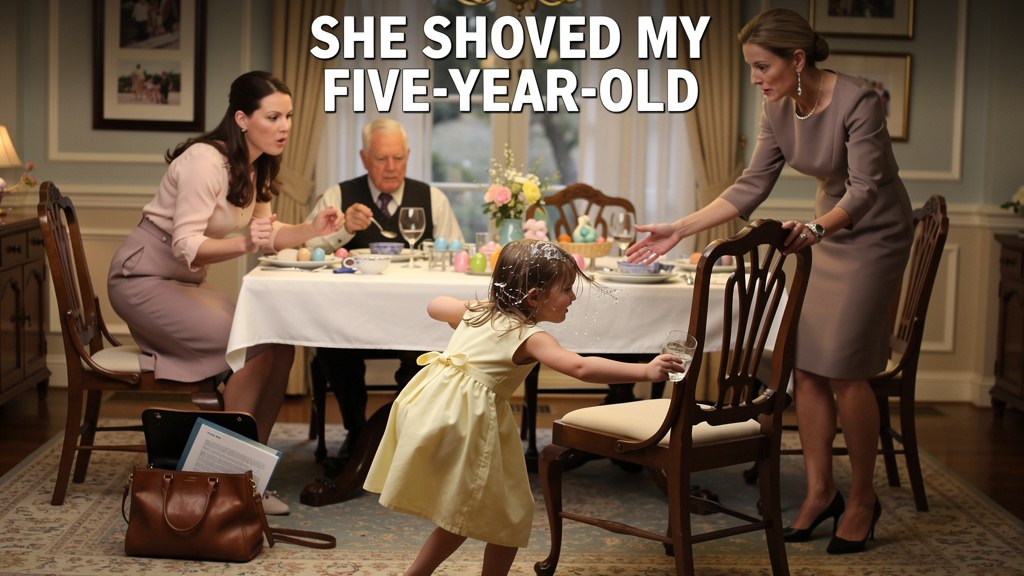
The documents in my handbag on Easter Sunday were the signed governance resolutions.
I had planned to tell Richard privately after dinner.
I had even rehearsed the conversation.
I never imagined Katherine would make the decision easier.